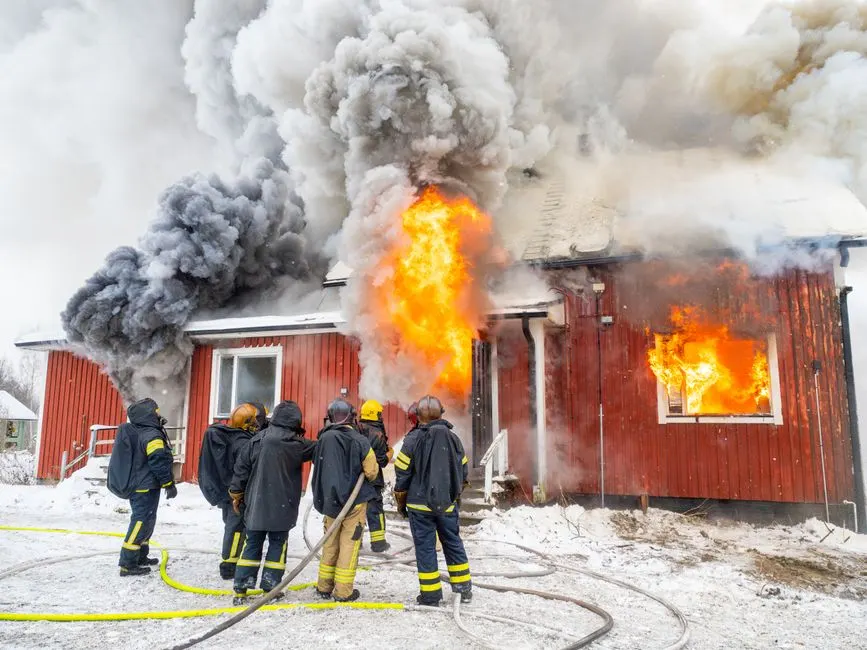
A professional fire damage inspection is a room-by-room evaluation of your home after a fire, where a trained technician documents the burn, smoke, soot, and water damage, tests residue, and produces a written scope you can hand to your insurance adjuster. In Gonzales, the whole walk-through usually takes 60 to 120 minutes on a typical single-story home, and you get a written report within 24 to 48 hours. The rest of this post walks through each step in order, what the technician is looking for, how long it takes, and how the numbers on that report turn into an actual repair plan.
The Short Answer: What a Fire Damage Inspection Actually Is
A fire damage inspection in Gonzales is a documented assessment that separates what burned from what only got smoked, and what got wet from the fire hoses. That distinction matters because each category is cleaned, dried, or rebuilt differently, and insurance pays for them on separate line items.
Most homeowners assume the inspection is mostly about the room where flames were visible. In reality, smoke travels. It pushes through attic chases, HVAC returns, and wall cavities, and it deposits acidic residue on surfaces 40 or 50 feet from the fire. A proper inspection follows that path.
If you are searching for a Fire Damage Restoration Gonzales LA team to run this inspection, the credentials to look for are IICRC-certified technicians, a written scope with photos, and a company that handles both the assessment and the rebuild. Splitting those two jobs between two companies is where most claims stall.
Step 1: Safety Sweep and Structural Walk-Through
The inspection starts outside the front door, not inside the burned room. Before anyone walks the interior, the technician checks for structural compromise, live electrical, and gas leaks.
Here is what gets checked in the first 15 to 20 minutes:
- Roof and attic framing - charred rafters, sagging sheathing, and whether the truss system lost load-bearing capacity.
- Load-bearing walls and floor joists - a 1/8-inch char depth on a 2x10 joist is usually sandable; deeper than that and the member gets sistered or replaced.
- Electrical panel and wiring - breakers get shut off at the panel, and any circuit that ran through the fire zone gets tagged for a licensed electrician.
- Gas lines and appliances - the meter gets shut off if there is any question about a compromised line.
- Windows, doors, and roof openings - anything that needs immediate boarding so rain and intruders stay out.
If the structure is not safe to enter, we board it up first and inspect from the exterior and through doorways. That is where emergency board-up services Gonzales LA come in - a same-day board-up protects the property while the assessment continues the next morning.
One local note: Gonzales homes built before the 1990s often have older attic wiring and pier-and-beam foundations. Both change how a fire spreads and how much of the subfloor has to come out. We see this constantly in the older blocks near Galvez Fire Damage Restoration territory, where a kitchen fire can travel under the floor before it ever shows on the ceiling.
Step 2: Mapping the Fire, Smoke, and Water Damage Zones
Once the structure is cleared, the technician walks every room and marks it into one of three zones: direct fire damage, smoke and soot damage, or water damage from suppression. Each zone gets its own photos, moisture readings, and notes.
Zone 1 is the burn room and anything within roughly 10 feet. Expect charred drywall, melted fixtures, and burned framing. Zone 2 is the smoke path - hallways, adjacent bedrooms, closets, and the attic. Zone 3 is wherever water pooled, which is often the room directly below the fire because water runs downhill through the floor assembly.
This step is where a fire damage assessment Gonzales Louisiana homeowners can actually use gets built. A vague report that says "smoke damage throughout" will get a vague settlement. A report that says "soot residue on 340 square feet of ceiling in the master bedroom, pH 4.2, requires alkaline cleaning" gets paid.
We use thermal imaging cameras and pin-type moisture meters to find water that has wicked into wall cavities. A wall can read dry on the surface and hold 25% moisture content behind the baseboard. If that moisture is not caught during the inspection, it becomes a mold job three weeks later.
Step 3: Testing Soot, Smoke Residue, and Air Quality
Soot is not one substance. It is a mix of carbon, oils, and whatever burned, and the chemistry determines which cleaner works and which one smears the residue deeper into the surface.
During the inspection, technicians test residue in a few spots per room and note the type:
- Wet, oily soot - from kitchen grease fires or burning plastics. Smears easily. Needs solvent-based cleaning.
- Dry, powdery soot - from paper, wood, and fabric. Vacuums up with HEPA equipment before any wet wiping.
- Protein residue - from a kitchen fire that never really flamed. Nearly invisible, but the smell is overpowering and it discolors paint.
Air quality gets checked in the same pass. We look at HVAC filter loading, duct contamination, and whether the return air pulled smoke into the system. If the system ran during the fire, every duct in the house is now a smoke distribution network.
This is also where we decide between cleaning and replacing. A soot-damaged ceiling can often be cleaned and sealed. A soot-damaged HVAC flex duct almost never can. That call gets made on the inspection, not on the day the crew shows up.
Step 4: Documenting Contents and Personal Property
Everything inside the home gets catalogued during the inspection - furniture, clothing, electronics, documents, and appliances. Each item is photographed, described, and marked as cleanable, restorable, or a total loss.
This is the step homeowners underestimate. Contents typically account for 30% to 50% of a total fire claim. If the inspection report lists "contents: affected" with no itemization, you are leaving money on the table.
Items that can be saved get packed out and cleaned off-site. That includes upholstered furniture, clothing, dishes, and electronics that only saw smoke. Items that cannot be saved on-site get documented for the adjuster. If you want to see how that part of the process works, our contents cleaning and restoration Gonzales LA page covers the ultrasonic and ozone methods we use on smoke-exposed belongings.
Bring three things to the inspection if you can: your insurance policy number, a list of high-value items (jewelry, firearms, art, collectibles), and any receipts you have for recent purchases. It speeds up the contents portion by hours.
Step 5: Building the Scope of Work and Cost Estimate
The inspection ends with a written scope of work - a line-by-line document that says what gets cleaned, what gets removed, what gets rebuilt, and what it costs. This is the document your adjuster works from.
A typical scope includes:
- Emergency services performed (board-up, tarping, water extraction).
- Demolition - what comes out and how many square feet.
- Cleaning - soot removal, smoke odor treatment, contents cleaning.
- Drying - number of air movers and dehumidifiers, and how many days.
- Reconstruction - drywall, paint, flooring, trim, cabinets.
- Contents - itemized list with replacement values.
For a typical 2026 Gonzales kitchen fire in a 1,800-square-foot home, the full scope usually lands between $18,000 and $45,000 depending on how far the smoke traveled and whether the HVAC system was contaminated. A contained stovetop fire with fast suppression can come in under $10,000. A fire that reached the attic can push past $80,000.
We write the scope in Xactimate, the estimating software most carriers use, so the numbers line up with what the adjuster expects to see. That alone cuts weeks off the claim cycle.
How Long Does a Fire Damage Inspection Take in Gonzales?
A fire damage inspection in Gonzales takes 60 to 120 minutes on-site for a typical single-family home, and you receive the written report within 24 to 48 hours. Larger homes, commercial buildings, and fires that reached the attic take longer - sometimes a full day with two technicians.
The variables that stretch the timeline:
- Square footage. Under 2,000 square feet is a single-visit job. Over 4,000 square feet usually needs a second pass.
- Attic and crawlspace involvement. Every extra cavity adds 20 to 30 minutes.
- Contents volume. A fully furnished home takes longer to catalogue than a rental with minimal furniture.
- HVAC contamination. If the system ran during the fire, duct inspection adds an hour.
If your home is in a newer subdivision near Fire Damage Restoration in Prairieville, the open floor plans and shared attic chases tend to move smoke faster than older homes, so we budget extra time for attic inspection. Same crew, same process, just more ground to cover.
What the Inspection Costs and What Insurance Covers
The cost of a fire damage inspection Gonzales homeowners pay is usually $0 out of pocket when you hire a restoration company that works with insurance. The inspection is billed as part of the claim, not as a separate fee.
If you hire an independent inspector or a public adjuster, expect $400 to $1,200 for a residential inspection report in 2026. That is a real cost, and it is worth it in some situations - particularly if you are disputing a lowball settlement.
Most homeowner policies cover:
- Emergency services (board-up, water extraction, tarping).
- Structural cleaning and soot removal.
- Smoke odor treatment.
- Contents cleaning and replacement.
- Additional living expenses (hotel, meals) while the home is uninhabitable.
- Rebuild costs up to policy limits.
What policies usually do not cover: the cause of the fire itself if it was intentional, and any damage that existed before the fire. That is why the inspection report has to clearly separate pre-existing conditions from fire damage. We photograph everything and note pre-existing wear so there is no argument later.
Common Mistakes Homeowners Make After a Fire
The biggest mistake is waiting. Smoke residue is acidic, and it starts etching metal, glass, and painted surfaces within 72 hours. After a week, chrome faucets pit and appliances start to corrode from the inside.
Other mistakes we see regularly:
- Wiping soot with a wet rag. That smears oily residue deeper into drywall and turns a cleanable wall into a replacement.
- Running the HVAC to "air out" the house. That pulls smoke into every duct and turns a $2,000 cleaning into a $9,000 duct replacement.
- Throwing away burned items before documenting them. The adjuster needs photos and descriptions. Once it is in the dumpster, it is gone from the claim.
- Hiring the first company that knocks on the door. Storm-chasers follow fires. Verify the company is local, licensed, and IICRC-certified before you sign anything.
- Signing a scope you do not understand. Ask what each line item covers. A legitimate contractor will walk you through it.
If the fire was suppressed with water - and almost all of them are - the water damage can be worse than the burn. A 1,500-square-foot home can absorb 400 to 600 gallons of suppression water. That has to be extracted and dried within 48 hours or mold starts. Our water damage restoration Gonzales LA team handles that side of the job in parallel with the fire cleanup, so the structure does not trade one problem for another.
When to Call a Professional
Call a professional the same day as the fire, even if the damage looks minor. Smoke odor, hidden moisture, and HVAC contamination are not things you can see from the doorway, and they are the three issues that turn a small claim into a large one.
You should also call if any of these are true:
- The fire was suppressed with water (which is almost always).
- The HVAC system ran during or after the fire.
- You can smell smoke in rooms that had no visible flames.
- Any part of the structure - ceiling, floor, or wall - feels soft or spongy.
- Your insurance adjuster has not scheduled an inspection within 48 hours.
firedamageremovalgonzales.com runs inspections and full restoration under one roof, which means the person who writes the scope is the same person responsible for the finished job. No handoffs, no finger-pointing between the inspector and the contractor.
Frequently Asked Questions
What happens during a professional fire damage inspection in Gonzales LA?
A technician walks the entire structure, checks safety and structural integrity, maps fire, smoke, and water zones, tests soot residue and air quality, documents contents, and produces a written scope of work. On-site time is 60 to 120 minutes; the written report follows within 24 to 48 hours.
How long does a fire damage inspection take in Gonzales?
Plan on 60 to 120 minutes for a typical single-family home. Larger homes over 4,000 square feet, attic-involved fires, and commercial buildings can take a full day. The written report is delivered within 24 to 48 hours of the walk-through.
Who does fire damage inspections near me in Gonzales Louisiana?
Licensed fire damage restoration companies with IICRC-certified technicians perform these inspections, and most offer them at no out-of-pocket cost when you hire them for the restoration. Independent inspectors and public adjusters also do them for $400 to $1,200 in 2026.
Is a fire damage inspection covered by insurance in Gonzales?
Yes, when it is part of a restoration claim. The inspection is billed as part of the loss, not as a separate fee, and most homeowner policies cover it under the dwelling and contents coverage. Independent inspection fees are usually reimbursable if you document them.
How do I prepare for a fire damage inspection in Gonzales Louisiana?
Have your policy number, a list of high-value items, and any recent purchase receipts ready. Do not clean anything, do not run the HVAC, and do not throw away burned items before they are photographed. Leave the property secured and let the technician walk it undisturbed.
Get Help with Fire Damage Restoration in Gonzales
If your home has fire, smoke, soot, or suppression water damage, we can inspect it today and have a written scope in your hands within 48 hours. Call us at +1 (225) 545-1003 and we will schedule the inspection, board up anything that needs it, and start the drying and cleaning the same day.